How to Choose a Trolley Jack: Tonnage, Height and Type
A trolley jack is one of those tools you only think about when you buy the wrong one. Too little capacity and it will not lift safely; too little reach and it will not get to the jacking point; too tall when collapsed and it will not fit under a lowered car. This guide covers the three things that actually matter — tonnage, lift height and type — so you buy once and buy right.
1. Tonnage: how much it can lift
The golden rule is to buy a jack rated well above the load you will put on it. A jack’s rating is its maximum, not its comfortable working load, so give yourself margin. As a rough guide: a 2–3 ton jack suits most passenger cars, a 3–5 ton jack covers bakkies, SUVs and light-commercial vehicles, and anything heavier — vans, trucks, trailers — needs a dedicated heavy-capacity jack. Remember you are usually lifting one corner at a time, but axle and centre-point lifts put far more of the vehicle’s weight on the jack, so do not cut the margin fine.
2. Lift height and reach
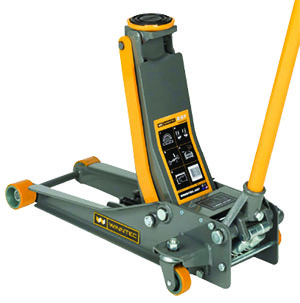
Two heights matter. The minimum (collapsed) height decides whether the jack slides under the vehicle at all — lowered and sports cars need a genuine low-profile jack such as a 2-ton low-profile trolley jack. The maximum height decides how far you can raise the vehicle, which matters when you need to get a wheel well clear or slide stands underneath. For vehicles with a high ground clearance or a centre jacking point set well inboard, a long-reach trolley jack gets the saddle to where it needs to be without you crawling under the car.
3. Type: manual or air-hydraulic
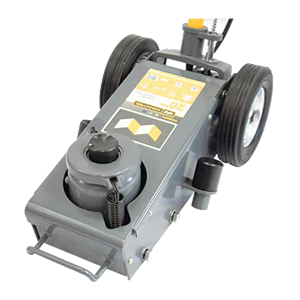
A standard hydraulic trolley jack is pumped by hand and is perfect for a home garage or a workshop doing moderate volume. But if your team is lifting vehicles all day, a air-hydraulic trolley jack uses your shop’s compressed air to do the lifting — far faster and far less tiring across a full shift, and available in very high capacities for heavy commercial work like the 32-ton air-hydraulic jack. Specialist jobs have specialist jacks too: a gearbox jack with a cradle is built for dropping and refitting transmissions safely.
The stand you must not skip
A trolley jack is a lifting tool, not a holding tool. The moment the vehicle is up and you intend to work under it, it must rest on jack stands or trestles rated for the load, such as a set of 3-ton ratchet trestles. If you would like the full reasoning on when to reach for each tool, our guide on trolley jack vs bottle jack covers it in detail.
Ready to choose?
Browse the full trolley jacks, bottle jacks and stands range — every jack is supplied new with warranty and prices include VAT. Tell us the vehicles you work on and we will match you to the right capacity and reach; contact us here.
Posts Widget
-
1
-
2
-
3
-
4
Automotive Equipment, Tools & Accessories
Enterprise number K2024519484
VAT registration number 9003172336
Copyright © 2026 AETANDA. All rights reserved.

2 thoughts on “How to Choose a Trolley Jack: Tonnage, Height and Type”
Pingback: Tyre Fitment Centre Equipment Checklist | AETANDA
Pingback: Trolley Jack vs Bottle Jack: Which to Use | AETANDA