Trolley Jack vs Bottle Jack: Which Is Right for Your Workshop?
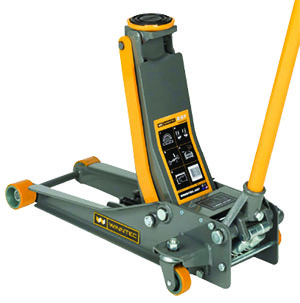
Every workshop needs a way to lift a vehicle off the ground, but “which jack?” is not a one-answer question. The two workhorses of any bay — the trolley jack and the bottle jack — are built for different jobs, and using the wrong one costs you time on every lift. Here is how to decide which belongs in your bay, and when you actually need both.
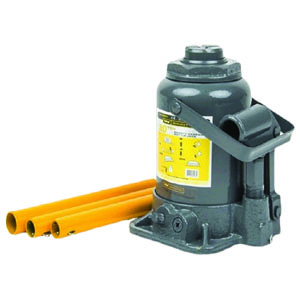
How each jack works
A trolley jack (sometimes called a floor jack) is the flat, wheeled jack you roll under a car. Its hydraulic ram pushes a long arm that raises a saddle in an arc. Because it rolls and has a low profile, it slides under a vehicle easily and lifts quickly with a few pumps of the handle.
A bottle jack stands upright — the ram pushes straight up out of a cylinder that looks a bit like a bottle, which is where the name comes from. It has a tiny footprint and a huge lifting capacity for its size, but it needs more vertical clearance to fit underneath and it does not roll.
Trolley jack: the everyday lifter
For day-to-day car and light-commercial work, the trolley jack wins on speed and convenience. Its low collapsed height lets it reach under lowered cars, and the wheels let you position the saddle precisely under a jacking point. A 2-ton low-profile trolley jack handles most passenger cars, while a 5-ton long-reach trolley jack or 10-ton long-reach model reaches the centre jacking points of bakkies, vans and larger vehicles. For heavy commercial work, air-hydraulic trolley jacks like the 20-ton air-hydraulic trolley jack use shop air to do the lifting so the technician is not pumping a handle 30 times per wheel.
Bottle jack: the heavy hitter in tight spaces
When the load is very heavy or the space is very tight, the bottle jack earns its place. Because it lifts straight up from a compact base, it fits where a trolley jack’s arm cannot swing, and it delivers enormous capacity — a single 20-ton bottle jack is smaller than a shoebox. The trade-off is height: a bottle jack needs enough clearance under the vehicle to stand upright, so it is less suited to low cars and more at home under trucks, trailers and machinery.
The rule that matters most: a jack lifts, it does not hold
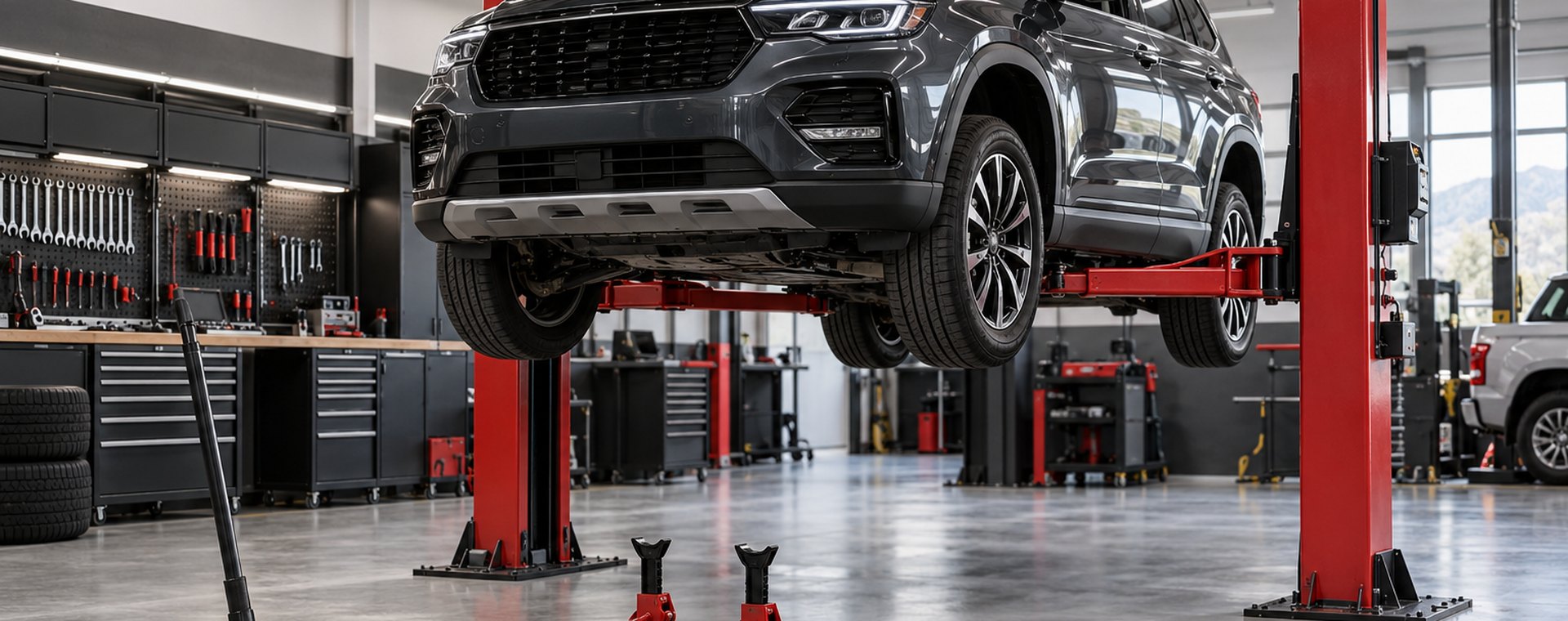
Whichever jack you choose, never work under a vehicle supported only by the jack. A hydraulic jack can lose pressure and drop. Once the vehicle is up, it must sit on jack stands or trestles rated for the load — for example a set of 3-ton ratchet trestle jack stands. The jack raises the vehicle; the stands hold it. This is not optional, and it is the single most important safety habit in any workshop.
So which should you buy?
For a general workshop or tyre bay, a trolley jack is the primary tool — you will reach for it dozens of times a day. Add a bottle jack for the heavy or awkward lifts a trolley jack cannot reach, and always pair either one with proper stands. Most bays end up with both plus a set of trestles, which is exactly why our Jacks & Trestles range covers trolley jacks, bottle jacks and stands from 1.5 tonnes to 60 tonnes.
Every jack is supplied new with warranty and prices include VAT. Not sure which capacity suits your vehicles? Contact us and we will point you to the right one.
Further reading: how to choose a trolley jack and our tyre fitment centre equipment checklist.
Posts Widget
-
1
-
2
-
3
-
4
Automotive Equipment, Tools & Accessories
Enterprise number K2024519484
VAT registration number 9003172336
Copyright © 2026 AETANDA. All rights reserved.
